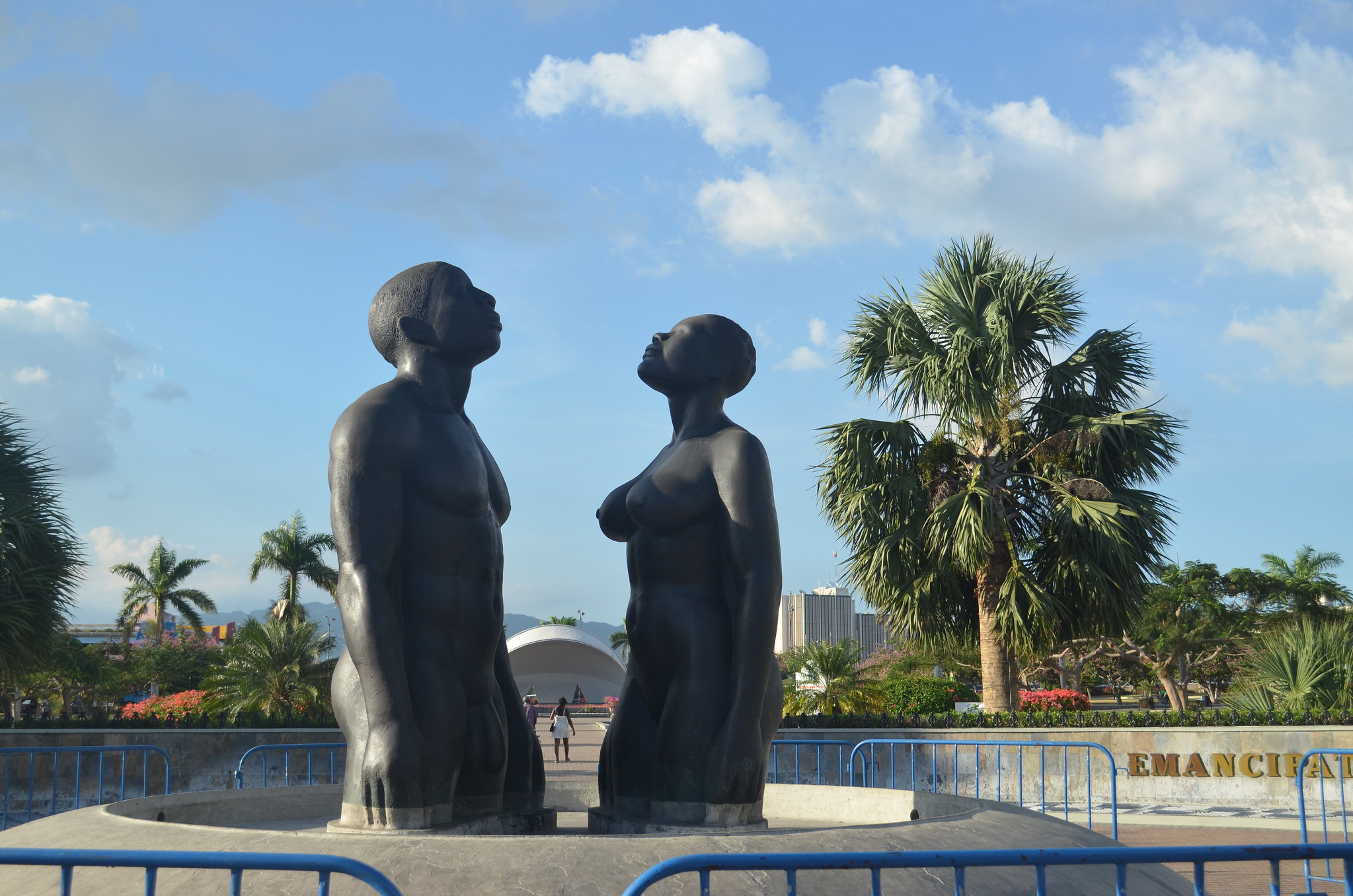
Emancipation Day is observed on 1 August in many Caribbean countries, including Barbados, Jamaica, and Trinidad and Tobago. It is a day of celebration and remembrance, marking the coming into force of the Slavery Abolition Act on 1 August 1834, which began the process of ending slavery across most of the British Empire. Full emancipation followed in 1838, with the ending of the deeply unjust apprenticeship system.
Emancipation Sunday is observed on the Sunday closest to 1 August each year. Its observance is a longstanding tradition here at St Augustine’s, dating back to about 2010, reflecting our church’s longstanding relationship with the Caribbean community and with the West Indian Families and Friends Association (WIFFA), which has had close links with St Augustine’s for many years.
From the 1400s until the 1800s, more than 12 million African men, women and children were forcibly transported across the Atlantic in the transatlantic slave trade.
They were torn from their homes and communities and transported to the Americas, where they were enslaved and exploited on plantations, in mines and in homes.
The voyage across the Atlantic, known as the Middle Passage, was brutal. People were confined in appalling conditions, subjected to hunger, disease and violence. Around 1.8 million people are estimated to have died during the crossing itself, while countless others died through the violence, displacement and suffering caused by the slave trade.
Yet enslaved people resisted their oppression, and across generations many fought for justice, freedom and abolition.
Olaudah Equiano. Ottobah Cugoano. Ignatius Sancho.
Samuel Sharpe. Mary Prince. Harriet Tubman. Frederick Douglass.
William Wilberforce. Hannah More. Granville Sharp. Thomas Clarkson.
And countless others, named and unnamed, who resisted slavery and stood against injustice.
Their courage, faith and determination helped to shape the freedom that Emancipation Day celebrates. Their story is not only part of Caribbean history, but part of the history inherited by churches such as our own.
It is also part of Britain’s history. Britain played a major part in the transatlantic slave trade and profited greatly from slavery. Britain was also home to a long campaign for abolition which eventually succeeded in changing the law. Remembering Emancipation therefore means remembering our history truthfully, and renewing our commitment to the dignity and freedom of every human being.
On Emancipation Sunday at St Augustine’s, our voices ring out in celebration of freedom, in remembrance of those who suffered, and in honour of all those who fought against slavery. We also remember those who continue the struggle today, and pray for all who work to end modern slavery and human trafficking across our world today.